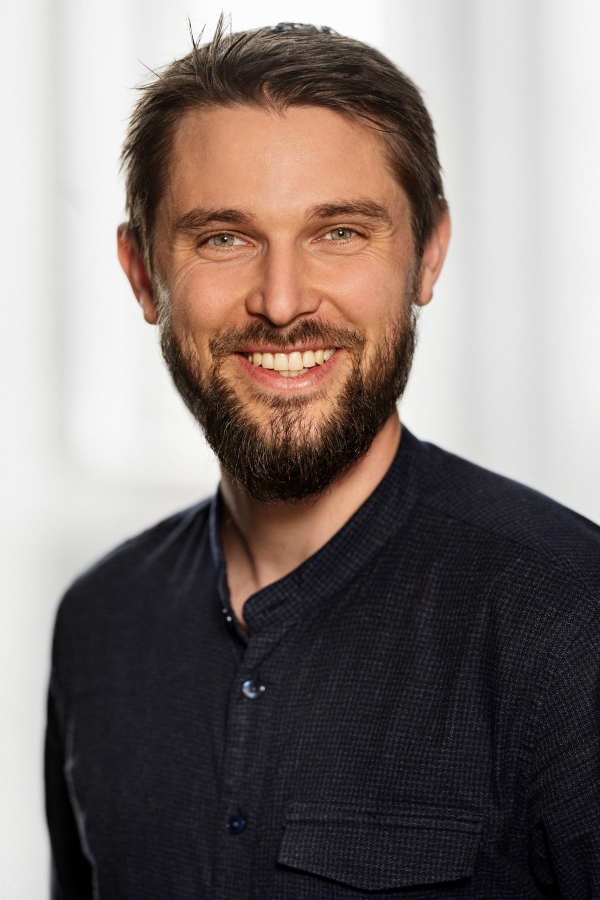
Anton A. A. Autzen, PhD
Anton leads the Nanosmithery at DTU Health Tech, where his group develops functional polymers for native nanodisc technology, drug delivery, and immunoengineering. He is co-inventor of the AASTY technology (Smith & Autzen et al., Chem 2020).
Postdoctoral training: Zelikin Lab (Aarhus University), Ting Xu Lab (UC Berkeley), Appel Lab (Stanford University).
Co-founder: Polyceutix. Elected member: Det Unge Akademi, Royal Danish Academy of Sciences and Letters.

Henriette E. Autzen, PhD
Henriette is a structural biologist and cryo-EM specialist whose research centres on the structural and functional characterisation of mammalian membrane proteins, including ion channels, GPCRs, and P-type ATPases. She determined the first structure of human TRPM4 in a lipid nanodisc (Autzen et al., Science 2018) and is co-inventor of the AASTY and MAASTY polymer platforms. The 3.5 Å MAASTY nanodisc structure of TRPM4 published in Nature Communications (2025) is the first cryo-EM structure from her Copenhagen laboratory.
PhD: Nissen Lab, Aarhus University. Postdoctoral training: Dept. of Biomedical Sciences, UCPH; Cheng Lab, University of California, San Francisco.
Co-founder: Polyceutix. Funded by Novo Nordisk Foundation Hallas Møller Emerging Investigator, Carlsberg Foundation, and The Lundbeck Foundation.