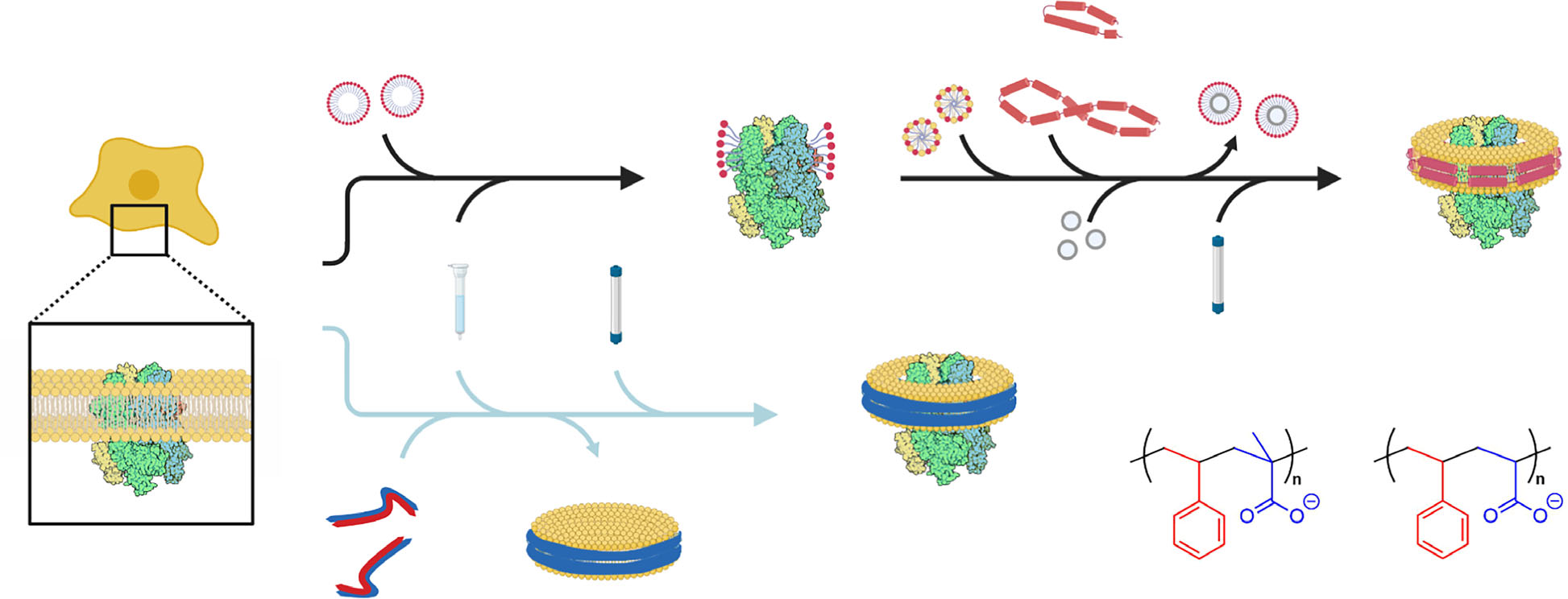
MAASTY is a methacrylic acid–styrene copolymer series designed for direct extraction of membrane proteins from native membranes into lipid nanodiscs. By systematically varying the methacrylic acid (MAA) content from 40 to 60 mol%, we give you a toolkit to find the optimal hydrophilic–hydrophobic balance for your specific membrane protein and lipid system, without detergent.
The most hydrophobic variant. MAASTY40's high styrene content makes it well-suited for membrane proteins embedded in cholesterol-rich or hydrophobic-heavy bilayers, where stronger hydrophobic interactions with the belt polymer support efficient extraction.
A moderately hydrophobic variant with broad membrane compatibility. MAASTY45 is a strong starting point for cholesterol-containing eukaryotic membranes and has shown good performance across diverse lipid compositions.
The balanced midpoint of the series, equal MAA and styrene content. MAASTY50 provides a useful reference point for comparisons with the published AASTY literature and is a strong general-purpose starting point for new membrane protein targets.
A moderately hydrophilic variant. MAASTY55 suits membrane proteins in lipid environments rich in charged headgroups, where a more hydrophilic belt polymer promotes efficient nanodisc formation and protein stability.
The most hydrophilic variant. MAASTY60 is designed for membrane systems dominated by anionic or polar lipids, or for membrane proteins that are destabilised by highly hydrophobic polymer belts.
Most commercial nanodisc polymers are sold at a single fixed composition, leaving researchers with no systematic way to optimise extraction for their membrane system. The MAASTY series is designed to change that. By sweeping MAA content from 40 to 60 mol% in matched 5 mol% steps, we give you a controlled compositional axis to screen across.
Replacing acrylic acid with methacrylic acid adds a methyl group to each hydrophilic monomer on the backbone. This increases the overall hydrophobicity of the polymer and results in a less ordered monomer distribution compared to AASTY, properties that translate directly into superior extraction efficiency for cholesterol-rich eukaryotic membranes.

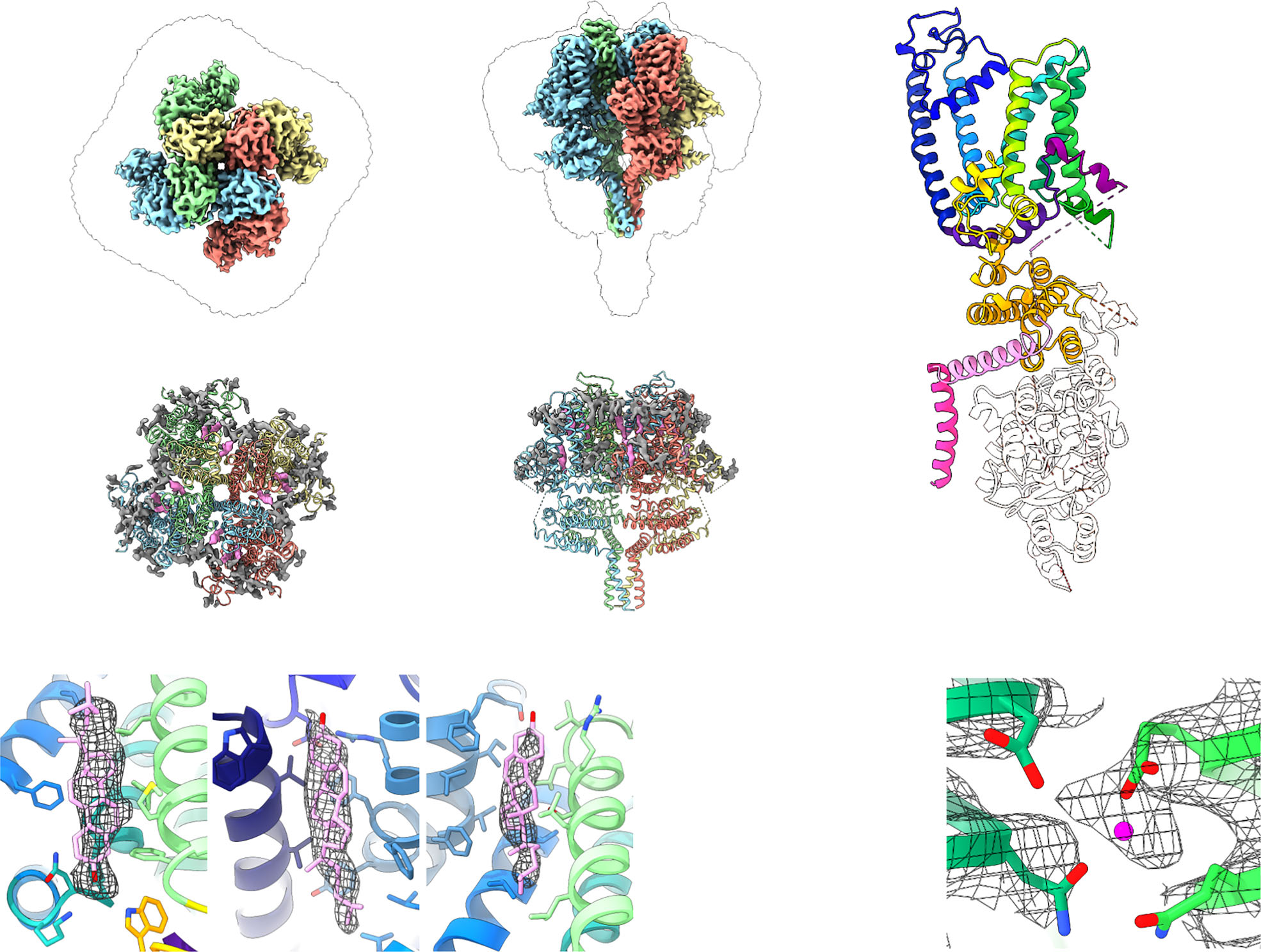
MAASTY nanodiscs preserve endogenous lipids, including cholesterol, and show enrichment of phosphatidylinositol, reflecting the native membrane environment rather than a reconstituted approximation. As demonstrated in Nature Communications (2025), this native lipid retention enables high-quality structural biology directly from cellular membranes.
All MAASTY products are synthesised by RAFT polymerisation with defined molecular weight. Products are delivered lyophilised from 50 mM HEPES, pH 8.0, and ship at room temperature. Reconstitution to a 10% w/v stock requires addition of ultrapure water only.
Each batch is characterised by GPC (molecular weight), ¹H-NMR (composition verification), and a nanodisc formation assay prior to release.